 15°
15°  8 կմ/ժ


The history of Rind village and viticulture are interwoven from the depths of centuries, forming a single whole. Here, the culture of cultivating grapes has never been merely agriculture or a means of livelihood. It is a lifestyle, a philosophy passed down from generation to generation, becoming an inseparable part of the community’s identity and the very essence of a Rind resident.
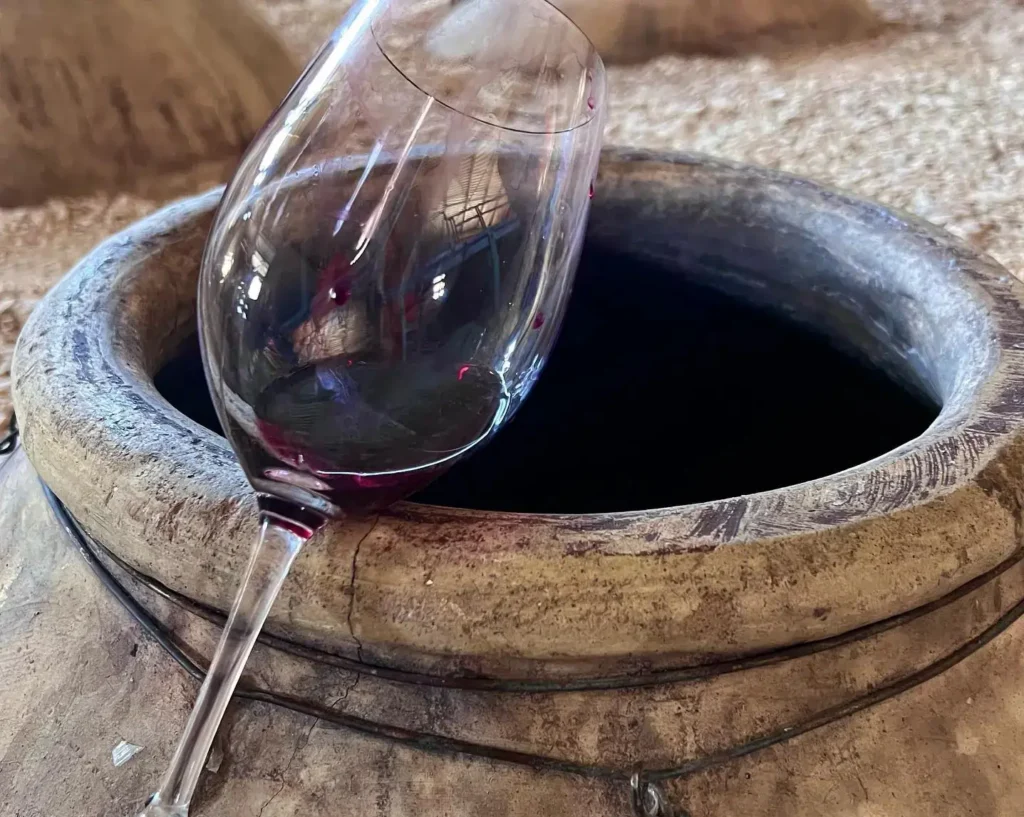
When speaking about Rind’s winemaking traditions, it is impossible to overlook the regional context. Just 2 km southeast of the village lies the heartbeat of world winemaking—the Areni-1 cave. The 6,000-year-old wine presses and clay vessels (karases) discovered there undeniably prove that we live in the cradle of grapes. Traces of ancient vineyards preserved within Rind’s territory also confirm that grape cultivation has been one of the primary occupations of the locals since time immemorial.
In archival materials from the second half of the 19th century describing daily life in Rind, wine occupies a central place as a mandatory winter reserve. It has been an integral component of the rituals and beliefs of the people of Rind; wine accompanied New Year, Easter, and Christmas celebrations.
For centuries, winemaking in Rind has been and remains the most respected occupation. The greatest pride of a Rind resident is producing high-quality wine and treating neighbors and relatives to it. In the autumn, one can often hear skilled winemakers addressing their neighbors: “Come and see if my wine turned out well.” This is not a request for validation of quality, but a unique offer to share the fruits of their labor, an act of hospitality.
Elders love to repeat: “It is very difficult for a Rind resident to make bad wine.” And these words have their scientific and moral basis. There are two guarantees for winemaking success: quality grapes and an “honest hand.” The first condition is ensured by Rind’s nature—the abundance of sunny days, proper irrigation, and organic enrichment of the soil. The second—the “honest hand”—is an ancestral custom: one must be honest when making wine, never cheating oneself, because for decades wine was made for one’s own family. This honesty has been preserved in sales as well, becoming the guarantee of Rind wine’s quality.
Soviet Heritage and High Appreciation
During the Soviet years, vineyards in Rind were expanded, and production volumes increased. At that time, wine was produced mainly from “Sev Areni” (Black Areni) and “Tozot” varieties (new types—Rosé and White—gained wide popularity in the 21st century).
Rind wine held a special place in the preferences of Armenia’s elite. Village elders still remember the special attitude of Anton Kochinyan, the First Secretary of the Central Committee of the Communist Party of Armenia, toward Rind wine. At one time, there was even a discussion about naming the grape variety “Rind,” although the “Sev Areni” version was chosen in the end. And since the 1990s, Yuri Javadyan, a merited figure in the agricultural sector, consistently stated in various meetings that the best peaches and the best wine can be found right here in Rind.
Isabekyan in Rind
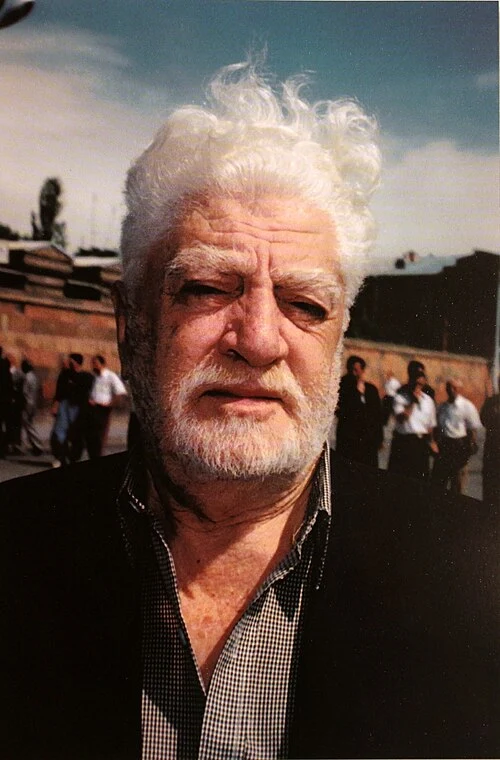
Rind wine had a magnetic pull for artists as well. People’s Artist Eduard Isabekyan often visited the village. A vivid memory remains in our family that Isabekyan had his own personal wine vessel (karas) at my grandfather’s brother’s house. During one visit, a villager naively asked the master: “Are you really a painter?” Without hesitating, Isabekyan took a pencil and drew a few lines on paper in a matter of seconds. At first, the image seemed unintelligible, but when they pinned the paper to a distant wall, everyone saw the living gaze of Paruyr Sevak with surprise and admiration…
A New Era of Winemaking
Until the 21st century, winemaking in Rind was exclusively traditional and homemade. However, in the last decade, the village has become one of the centers of the renaissance of Armenian winemaking.
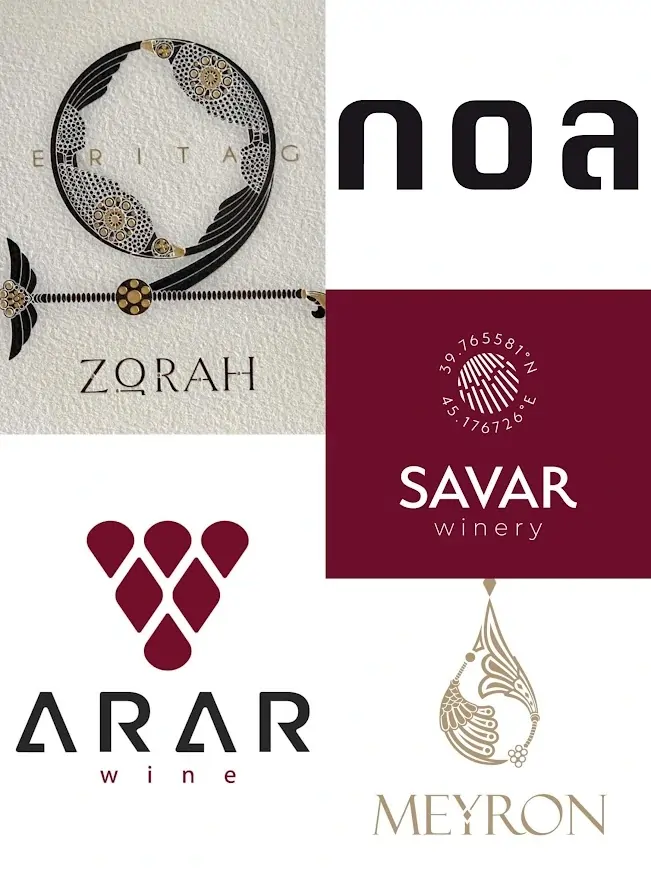
- ZORAH Wines: The pioneer was “ZORAH” winery. Founder Zorik Gharibyan, after sending soil samples from hundreds of locations in Armenia to Italy, chose the northern plateau of Rind (1400-1500m altitude). A historic event took place in 2012: the prestigious “Bloomberg Businessweek” included Zorah Karasi Areni Noir in its top 10 list following a blind tasting of the world’s 4,000 best wines. This put Rind and Armenian wine back on the world map.
- NOA Wines: “NOA” is born in the southern vineyards of Rind—a result of the collaboration between Jakob Schuler, founder of the Swiss “Schuler” winery, and Armenian businessman Zack Armen. 325 years of Swiss experience and Rind’s ancient terroir yield fantastic results. NOA wines win gold medals at the world’s most prestigious competitions, including Concours Mondial de Bruxelles and IWSC 2025 (Gold Medal for NOA Areni Red Reserve 2021).
- ARAR: The new and powerful signature of Rind’s winemaking. This is a wonderful example of family winemaking, where father and son Margaryan create natural wines. Despite its young history, ARAR has already won two gold medals at Concours Mondial de Bruxelles (Reserve 2019 and Reserve 2021).
- Meyron and SAVAR: In the northwest of the village, at an altitude of 1450m, lie the vineyards of “Meyron,” where the emphasis is on sustainable agriculture. And neighboring ZORAH operates “SAVAR,” utilizing all the advantages of the high altitude and soil composition.
The culture of wine in Rind is so alive that even sporting events are connected to it. The annual Trail Run passes right by the vineyards, giving participants the chance to enjoy the environment where the legend is born.
The Immortal Taste of Homemade Wine
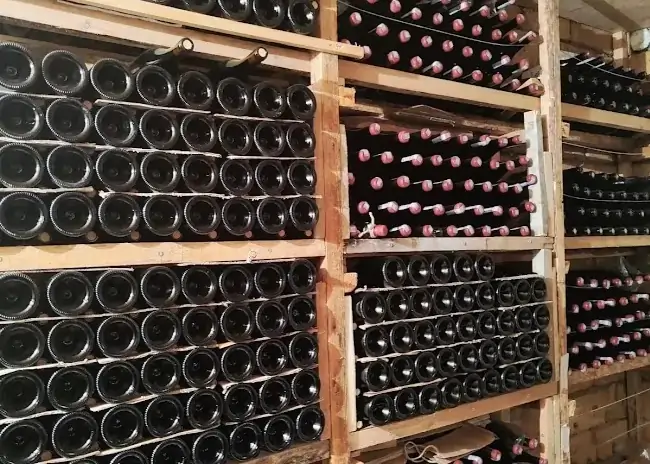
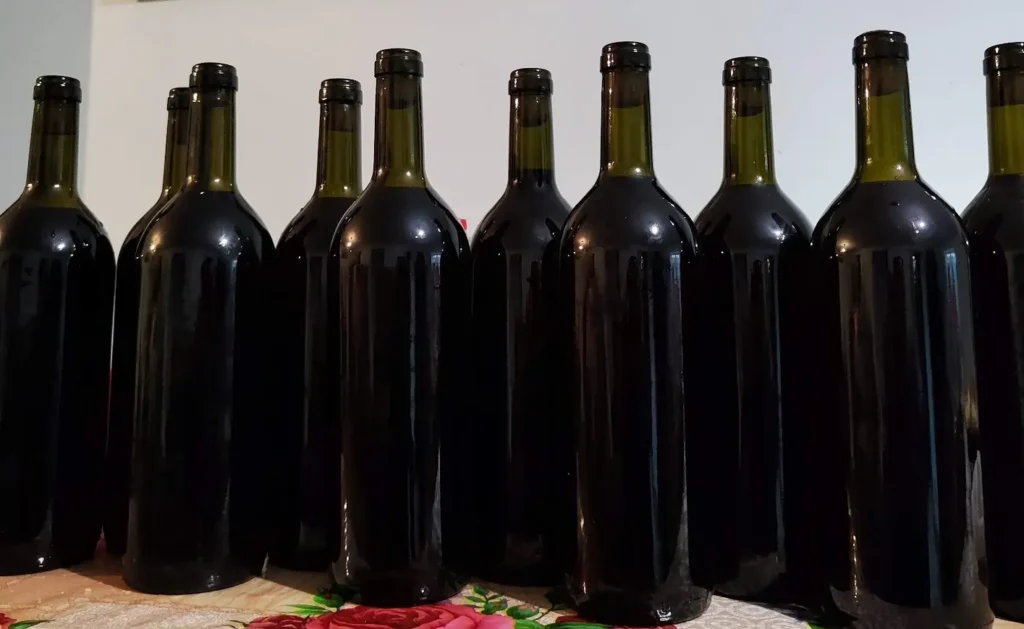
Despite the success of large wineries, homemade, traditional wine continues to enjoy great demand in Rind. Visitors to Rind know that there are dozens of skilled masters here from whose cellars one can acquire real “bitter” (dry) wine with 13-14% alcohol content, where the sugar has completely turned into spirit.
In recent years, Sevak Avetisyan, Margar Vardanyan, and many others have distinguished themselves with the quality and volume of their production. I can proudly mention that wines from my family cellar (about 2 tons annually) have also found their stable place in the preference lists of consumers in Yerevan and online stores.
Rind produces wine for those who appreciate a refined palate, value their health, and wish to enjoy that divine drink which our ancestors preferred.