
 6°
6°  7 կմ/ժ


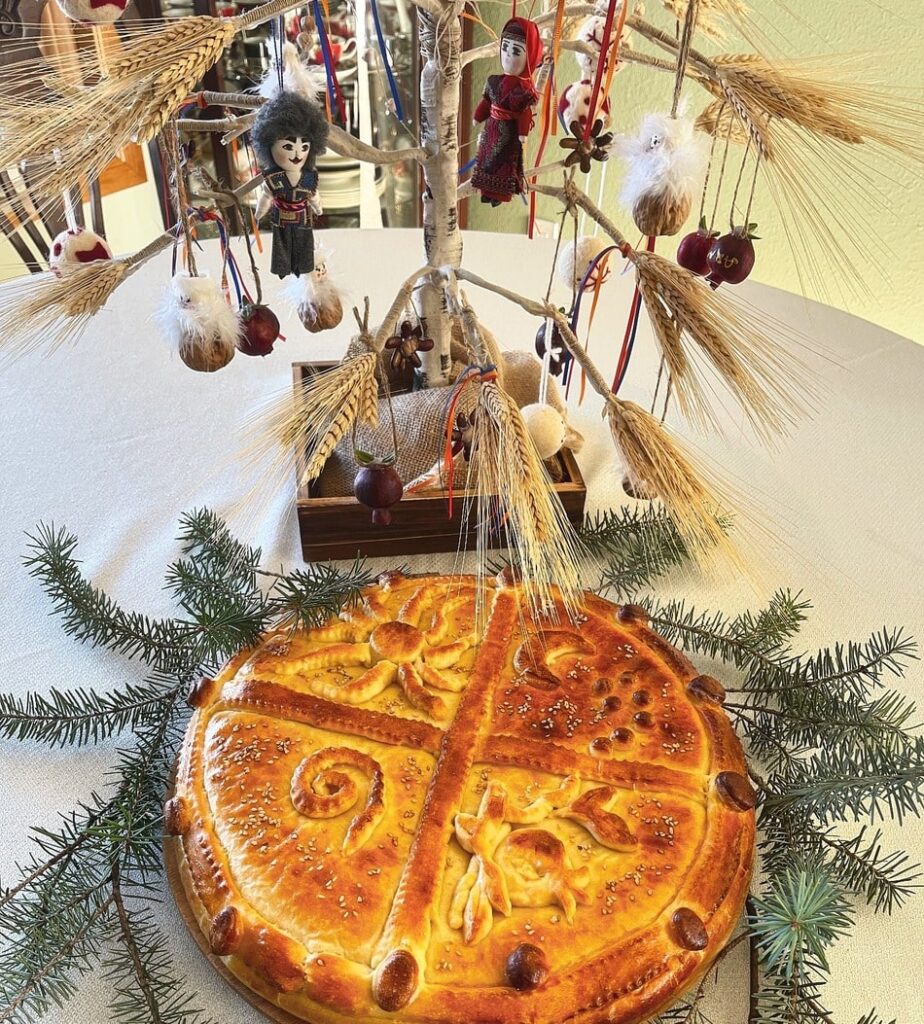
Throughout millennia, due to calendar changes, the New Year (Amanor) has been celebrated on different dates in Armenian life. However, one thing has remained unchanged: the solemnity of the holiday, distinguished by an exceptional variety of folk rituals, customs, and beliefs. For centuries, this has been the most beloved and anticipated celebration in the Armenian ritual calendar.
In the Vayots Dzor province, and specifically in Old Rind, during the late 19th and early 20th centuries, the turn of the year was known as New Year, Amanor, Kaghand, and partly as Navasard, Tareglukh (Head of the Year), and Avetis (Good Tidings).
Calendar Transitions: From Navasard to Kaghand
In the past, the Armenian New Year coincided with the start of the economic year, linked to the beginning of spring and the awakening of nature. In the next stage of calendar development, the New Year was marked on Navasard 1 (August 11). It was celebrated with great splendor as a festival of harvest and “first fruits.”
From the mid-17th century, the Christian New Year (January 1) gradually began to enter Armenian reality. However, it was not yet widespread. Even in the 18th century, according to the church calendar developed by Catholicos Simeon Yerevantsi, the New Year was considered not January 1, but January 6—the day of Christ’s Nativity. Only in later centuries did January 1 fully establish itself as the beginning of the year.
“Gotekakh” and “Avetis”: Festive Noise on the Skylights
One of the brightest and most joyful ceremonies in Old Rind was “Gotekakh” (Belt-hanging), also known as “Kakhu.” On New Year’s Eve, groups of children and young people would go around the village houses.
Since houses in Old Rind were often earthen and had yerdiks (skylights/smoke holes), children would climb onto the roofs and lower belts, bags, baskets, or socks through the opening. While doing so, they sang songs called “Avetis” or “Alleluia,” wishing the homeowners prosperity and abundance:
“Alleluia, Alleluia, May your house be prosperous, your hencoop full…”
Hearing the song, housewives would place festive treats in the hanging baskets: dried fruits, raisins, walnuts, gata, eggs, or fresh fruits. This ritual also had a fun side: sometimes, joking housewives would put an old shoe or ash in the basket to make the children laugh. However, mostly they tried to reward the “messengers of good tidings” generously, believing their blessings would fill the house with success.
The Mystery of Tarehats and the Kaghand Table
The New Year’s table was distinguished by a rich variety of dishes, although it was mainly Lenten (as it was the period of the Christmas fast). Fresh and dried fruits and nuts were prepared and stored in advance.
The jewel of the table was the Tarehats (Year Bread), also called “Krkeni,” “Dovlat” (Wealth), or “Mijink.” This was a large bread kneaded with wheat flour, water, or milk, with patterns on the surface. While baking, a “mijink” (a middle piece)—a silver coin, a bead, or a bean—was hidden inside.
The Tarehats was cut on New Year’s morning or the previous evening. It was divided into 12 parts (according to the months) or by the number of family members. Interestingly, portions were also set aside for the farm animals and even the soil and water, expecting fertility. Whoever found the “mijink” in their slice was considered the luckiest person of the year.
Mandatory dishes on the table included:
- Aghandz (roasted wheat and hemp seeds),
- Halim (a thick porridge made of wheat groats and chicken meat, similar to Harissa),
- Anushapur (sweet soup with dried fruits),
- Dried Fruits (sun-dried apricots and plums of Vayots Dzor).
Women also baked special pastries called “Asil-Vasils” or “Basliks.” These were shaped like people, purses, wheat ears, or animal hooves. It was believed they would contribute to wealth, long hair for girls, and an abundance of milk and wheat.
The Magic of “The First” and Divinations
The factor of “The First” was extremely important on New Year’s. Our ancestors were convinced that the first day, the first guest, or the first event had a magical power to influence the entire year.
Every family waited with bated breath to see who their first guest would be. They believed that if the door was first opened by a person with a good reputation and a “light foot” (lucky foot), the year would pass successfully. Therefore, during the holidays, the door was always left open.
Fate divinations were also common. For instance, on New Year’s Eve, girls would place an egg between charcoal and henna in a bowl on top of the tonir (oven). In the morning, they would check: if the egg had turned black, it was a sign of bad luck, but if it had turned red, it meant great success and joy.
Family Unity and Toasts
New Year in Old Rind was, first and foremost, a family holiday symbolizing the strength of the clan. The order of congratulations was strict: children congratulated parents, apprentices congratulated masters, gifting apples, pomegranates, socks, or handkerchiefs.
Wise toasts were raised around the festive table. A common wish in Rind was:
“Be healthy, may it be a year of joy. May we reach this day every year with dry eyes (no tears) and happy hearts. May the year be full and abundant. May God make death expensive and bread cheap.”
Reconciliation was also a crucial part of the holiday. Old grudges had to be forgotten. The elders of the clan would first visit relatives who had suffered a death in the past year to comfort them, after which the general celebration would begin.
The Tree of Life
Although the spruce tree has become the symbol of New Year today, Armenian tradition had an older version: the “Tree of Life” or “Kaghand Tree.” It was usually a branch of an olive or walnut tree, decorated not with toys, but with nature’s gifts—walnuts, dried fruits, pomegranates, and apples—symbolizing the continuity of life and fertility.