 14°
14°  14 կմ/ժ


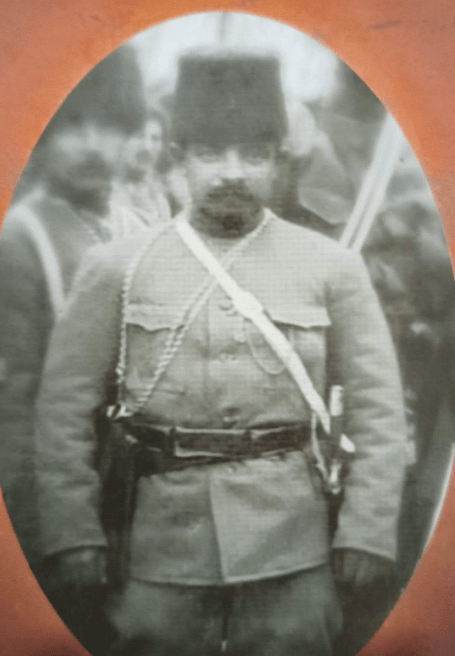
Armenian Dashnak avenger, national freedom fighter, and military commander of the Vayots Dzor province during the years of the First Republic of Armenia. His name and activities are heavily linked to the history of Rind.
Hovhannes Paronyan was born on April 21, 1878, in the village of Nerkin Goris in the Zangezur province. Although the only school in the province was located in his native village at that time, he did not attend school, but later filled this gap through self-education. His fellow villagers gave him the nickname “Yapon” due to his short stature and Japanese-like appearance.
In 1892, at the age of 14, he moved to Baku, where, with the help of his brother Hambardzum, he worked as a salesman and simultaneously learned to read and write. In 1898, he was drafted into the Russian army, serving in the 158th Kubinsky Regiment in Kars, where he graduated from military school with the rank of Senior Non-Commissioned Officer. In Kars, he met Dashnak figures, which played a decisive role in his enlistment in the national liberation struggle.
Combat Path Yapon’s activities were turbulent and decisive:
- 1903: Organized armed resistance against the Tsarist police during the confiscation of Armenian Church property.
- 1905–1906: During the Armenian-Tatar clashes, he carried out acts of retribution, including the assassination of Tsarist officials in Shushi.
- 1918: During the heroic battles of May, he participated in the Battle of Bash-Aparan under the command of Dro.
- 1918–1920: He was one of the organizers of the border defense of the First Republic of Armenia, especially in Zangezur and Vayots Dzor.
- 1920: After the Sovietization of Armenia, he became one of the organizers of the anti-Soviet armed struggle. He was arrested by the Red Army and executed in Goris prison in October of the same year.
Yapon played a crucial role in ensuring the security of the village of Rind. Starting from the 17th century, when Shah Abbas deported the Armenian population, nomadic Tatar tribes settled in the region. In the late 19th and early 20th centuries, the village of Ghzlja (Ghozulja) was established in the Kakavadzor area, northwest of Rind. This settlement became a center for banditry; they regularly raided Rind’s orchards, stealing livestock and crops.
In his memoirs, Yapon describes an episode that put an end to this impunity:
“In early May, the armed forces of the Turkish village of Ghzlja drove away about 200 sheep belonging to the Armenian village of Rind… When news was brought to me, I sent a letter demanding the immediate return of the stolen sheep. I gave each of them a week, warning that if my demand was not met, the entire village would be held responsible.
The given time passed, and I received no answer.
I took the battalion, two cannons, and a machine gun, and moved first towards Ghzlja… At dawn, we opened fire, and by noon we had captured the village. The entire property of the village was given to the village that owned the sheep [Rind], and I ordered the abandoned houses to be burned.”
Thanks to this operation, a centuries-old injustice was eliminated, and the residents of Rind were freed from a constant threat.
Hovhannes Paronyan—Yapon—is one of those devoted figures in Armenian history who not only defended the borders of the homeland but also ensured the peaceful work of the common peasant. For Rind, he was more than a commander; he was the sword of justice that cleansed the Armenian land of bandit groups, restoring the peasant’s dignity and property rights.