
 14°
14°  22 կմ/ժ


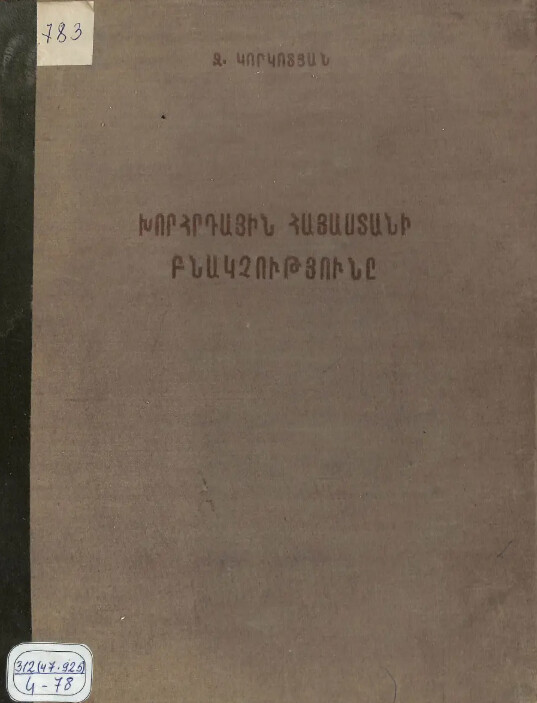
The history and development of Rind are best reflected in archival documents and statistical data. While previously our information was based on Zaven Korkotyan’s work starting from 1873, we now have the opportunity to see an earlier picture of Rind. Thanks to newly discovered data from the 1852 Census (Cameral Enumeration) and the testimonies of ethnographer Yervand Lalayan, we can uncover the very roots of the village’s primary lineages.
Rind in 1852: The Roots of the Lineages
According to the 1852 census archival records, Rind was home to 102 people: 59 men and 43 women. This document is unique as it allows us to identify by name the ancestors of today’s Rind residents and the formation of the village’s main families.
Based on the 1852 data, here are the prominent families and the lineages they founded:
1. Sargsents Lineage (Sargsyans): Founded by the village’s spiritual leader, Priest Ter Sargis (29), son of Ter Petros. His brothers, Ghazar (25) and Martiros (23), are also listed.
2. Baghdoghents Lineage: Originated from the branch of Baghdasar (42), brother of Simon (known as “Shorgetsi Simon,” 50), who migrated from Shoragyal (Shirak). Baghdasar’s 2-year-old son, Mkrtich, is also listed. The same household mentions another brother, Sanasar (40), with his sons Stepan (18) and Karapet (2).
3. Balinents, Mkrtichents, and Asoghents Lineages: The patriarch was Balin (65), son of Safar, one of the village elders at the time. Distinct branches emerged from his four sons:
- Khachatur,
- Mkrtich (Mkrtichents lineage),
- Karapet (according to other genealogical data, this son’s name was Abgar, also known as Palyoz),
- Asatur (Asoghents lineage).
4. Mkhsonts Lineage, Sahakyans, and Avetisyans: Founded by Safar’s other son, Aghabab (Mukhsi, 40), brother of Balin. His sons Sahak (8) and Avetis (6) became the ancestors of the Sahakyans and Avetisyans, respectively.
5. Avoghents Lineage: Founded by Avetis (43), son of Martiros; his son Aziz was 12 years old at the time.
6. Minasents Lineage: Founded by Minas (33), son of Gevorg.
Other families forming the community foundation included:
Sargis (35), son of Hovhannes, with sons Grigor (5) and Martiros (2).
Asatur (60), son of Sargis.
Sargis (48), son of Sanasar, with sons Sahak (16), Gevorg (13), and Martiros (11).
Brothers Abraham (25) and Manuk (20).
Abgar (25), Petros Asatur (50), and Ohanjan Harutyun.
Decades of Steady Growth (1873–1914) and Lalayan’s Testimony
In the second half of the 19th century, Rind remained a purely Armenian settlement, gradually increasing its population.
1873: 228 people (122 men, 106 women) across 23 families. Ter Sargis remained the village priest. This year’s records first mention Kurekh (Kyuregh, 25), son of Hovhannes and founder of the Kurekhents lineage. Of his seven sons, three were born by this time: Hovhannes (7), Manuk (5), and Mkrtich (3).
1886: 351 people (200 men, 150 women). The priesthood was now held by Ter Petros’s other son, Ter Ghazar. This census includes Vardan, son of Gevorg, who is presumably the patriarch of the Vardoyents lineage.
1897: 426 people (First General Census of the Russian Empire)
The Picture in 1904
By 1904, we have two remarkable complementary sources. Famous ethnographer Yervand Lalayan, describing the villages of Northern Vayots Dzor in the “Ethnographic Journal,” emphasizes that Rind (along with Aghavnadzor, Khachik, and Arpa/Areni) is inhabited by native Armenians. This was a key distinction; for instance, he notes that neighboring Elpin was settled by migrants from Khoy and Salmast. This confirms the ancient, indigenous roots of Rind’s population.
Statistical data for 1904:
According to Z. Korkotyan: 460 residents.
According to Y. Lalayan: 43 households (hearths) with 501 people (283 male, 213 female).
1914: 460–506 people (based on various sources, including the “Caucasian Calendar”).
War Years and the Great Influx (1916–1922)
The most turbulent changes occurred between 1916 and 1922.
1916: 627 people
1919: 896 people (unprecedented growth due to refugees escaping the Armenian Genocide).
1922: 717 people (the population dropped due to subsequent wars, famine, and disease).
The Soviet Period and Recovery
1926: 776 people
1931: 914 people
| Year | Population | Notes |
| 1852 | 102 | 59 men, 43 women (New data) |
| 1873 | 228 | |
| 1886 | 351 | |
| 1897 | 426 | First General Census of the Russian Empire |
| 1904 | 460 / 501 | Difference between Korkotyan and Lalayan |
| 1914 | 506 | |
| 1916 | 627 | |
| 1919 | 896 | Influx of refugees |
| 1922 | 717 | Consequences of war and disease |
| 1926 | 776 | |
| 1931 | 914 |
Note: Both figures for 1904 are included for historical accuracy. Throughout its entire history, Rind has been inhabited exclusively by Armenians.