 14°
14°  18 կմ/ժ


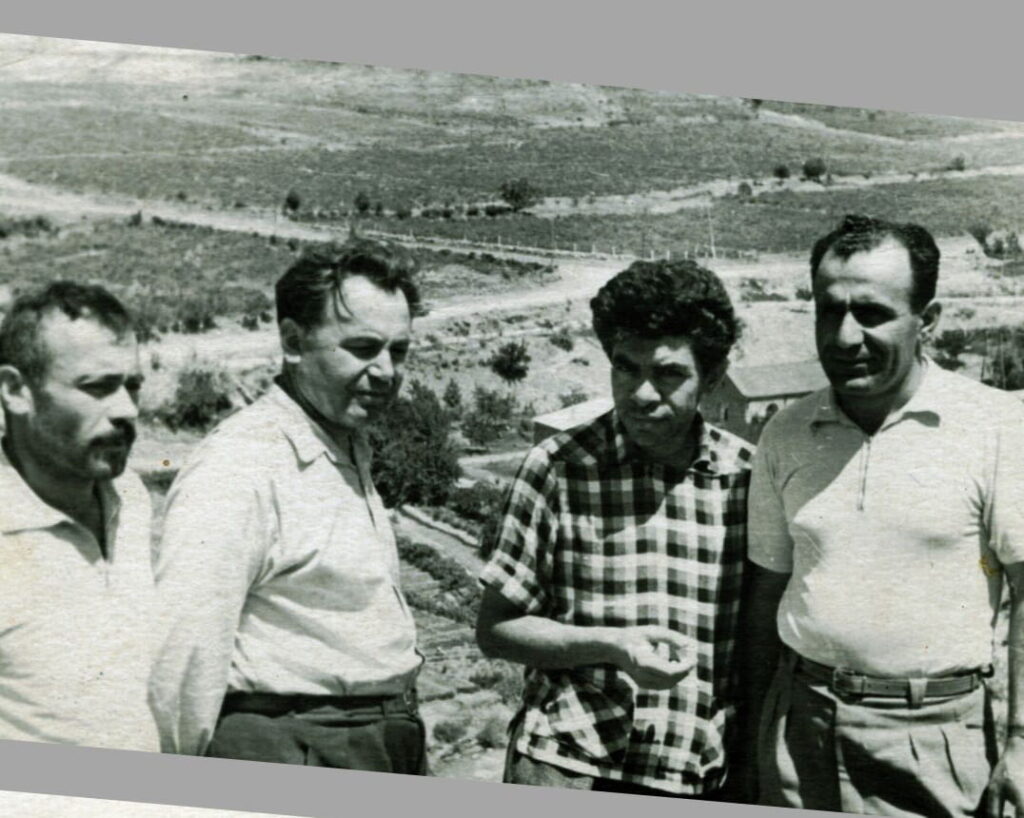
One of the most touching chapters in the history of Rind is connected to the family of the renowned Armenian poet Paruyr Sevak. It is a story of human kindness, survival, and generational memory.
The following episodes are retold based on the memoirs collected by Rind resident and educator Khachik Khachatryan, who recorded the accounts of eyewitness Vardan (Horos) Asatryan, the son of Petros Asatryan.
Refuge in Rind (1919)
It was the late autumn of 1919. The situation in Vayots Dzor was extremely tense; due to Turkic-Tatar attacks, the residents of Chanakhchi (Zangakatun) were forced to abandon their homes. Among them were Paruyr Sevak’s parents, Rafael and Anahit.
Hoping to find shelter, they reached Rind, where a distant relative lived. However, times were cruel: epidemics, famine, and fear left little room for compassion. Rafael and Anahit, suffering from typhus, were turned away by their relatives. In the cold wind, sick and desperate, the couple remained on the street, huddled in a roadside ditch.
At dawn, they were noticed by Petros Asatryan, a resident of Rind who was tending his sheep. Petros recognized Rafael (Rafael’s relative was the wife of Petros’s uncle). Seeing their helpless state, Petros, disregarding the danger of the epidemic, took them into his home.
The couple was settled in a warm room in the barn meant for watchmen. The care of Petros’s family, along with pure milk and honey, worked miracles. The winter passed with difficulty, but by spring, Rafael and Anahit had recovered. Through Petros’s mediation, Rafael found work in the village as a shepherd.
The Reward of Kindness
It is told that one day, while grazing sheep at a place called “Spitak Kar” (White Stone) in Rind, Rafael found a swarm of bees. He placed the bees in a bread sack and brought them to the village. The Asatryan family were known beekeepers, and they helped Rafael care for the bees.
When Chanakhchi was liberated in the summer of 1920 and the time came to return, Rafael took back not only his saved life but also the lambs earned for his labor and the bee colony he had found. Years later, Rafael often recalled:
“Do you see these bees… they are the continuation of the ones found under the White Stone. And Petros… he was a man of great soul; only he could be so generous in those dire days.”
Sevak’s Visit to Rind (1966)
Decades later, in 1966, when Rind had suffered from a landslide and was in the process of resettlement, the now-famous poet Paruyr Sevak visited the village.
Responding to the warm welcome of the villagers, Sevak first rushed to find the house of Petros, his parents’ savior. By that time, Petros had passed away (having lost four sons in World War II), but his wife, Gyulsabah, and their youngest son, Vardan (Horos), welcomed him.
The meeting was incredibly emotional. Embracing the elderly Gyulsabah, Sevak said:
“Dear mother, if it weren’t for you and Uncle Petros, my Rafael and Anahit wouldn’t exist, and neither would I. I owe my existence to you.”
After being hosted at Horos’s house, the village leadership and guests accompanied Sevak to Ulgur, the birthplace of Momik, where a banquet was organized near a cold spring.
It was during this visit that another important monument was enshrined in Rind’s history—”Sevak’s Spring“. You can read more about this hydrological monument on the corresponding page of our website.