 14°
14°  14 կմ/ժ


The Bear and the Man: Nature’s Stone Symbol
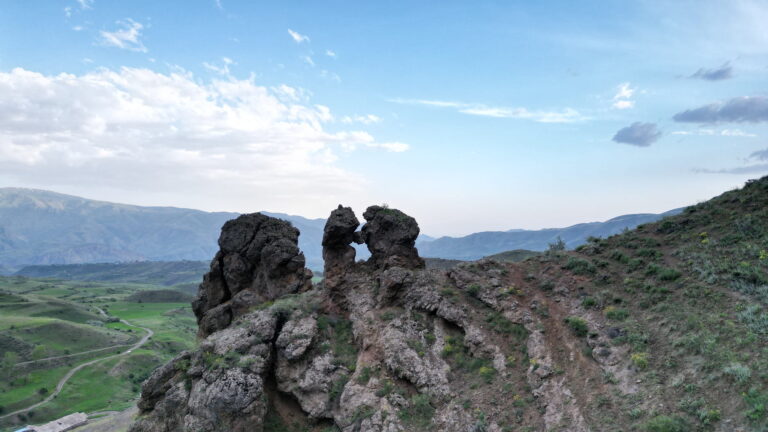
The natural landscape of Rind is rich not only in historical monuments but also in natural, unhewn wonders that have acquired symbolic meaning over the centuries. Among these unique formations is “The Bear and the Man” rock sculpture. Although it lacks official state status, it has long been a cherished symbol for the people of Rind—a unique logo of sorts that defines the spirit of the highlander.
Location and Structure
The natural sculpture is situated in the Kakavadzor area of the village, on the rocky right edge of the canyon. Standing approximately 5 meters tall, this stone composition consists of two massive, isolated boulders. These monoliths rise toward the sky, creating silhouettes that, from a distance, resemble the outlines of a man and a bear.
The most surprising and mysterious part of this formation is the point where the two boulders meet. Suspended between them in mid-air, as if held by an invisible force, is a smaller stone mass. This detail completes the image, creating the impression of wrestling or clasped hands. This stone “handshake” or “duel” becomes most expressive when viewed from the north, where the play of light and shadow breathes life into the rock.
Coexistence and Struggle
“The Bear and the Man” is not just a stone statue; it has deep historical and everyday roots. For centuries, the people of Rind have climbed their native mountains to gather medicinal herbs, mushrooms, or berries to earn their living. On those mountain trails, they often came face-to-face with the true master of the mountains—the bear.
The sculpture symbolizes the eternal dialogue between man and nature. On one hand, it represents the struggle for existence and a test of strength; on the other, it signifies natural coexistence and mutual respect. These stone giants seem to show that man, no matter how powerful, is a part of nature and must accept its laws to live in the mountains. It is a unique model of harmony where man and animal, strength and wit, complement each other while sharing the same world.
The sculpture dominates the area like a watchtower. It is perfectly visible from the section above Lake Yeghegnalich, stretching through the canyon to the Tsaghkadrunk Pass. It also accompanies pilgrims and tourists ascending to the ancient Vimaphor Church, serving as an inseparable companion and landmark on that path.
“The Bear and the Man” is more than just a geological formation. It is a stone testimony to the unbreakable bond between the people of Rind, their way of life, and nature.