 8°
8°  6 կմ/ժ


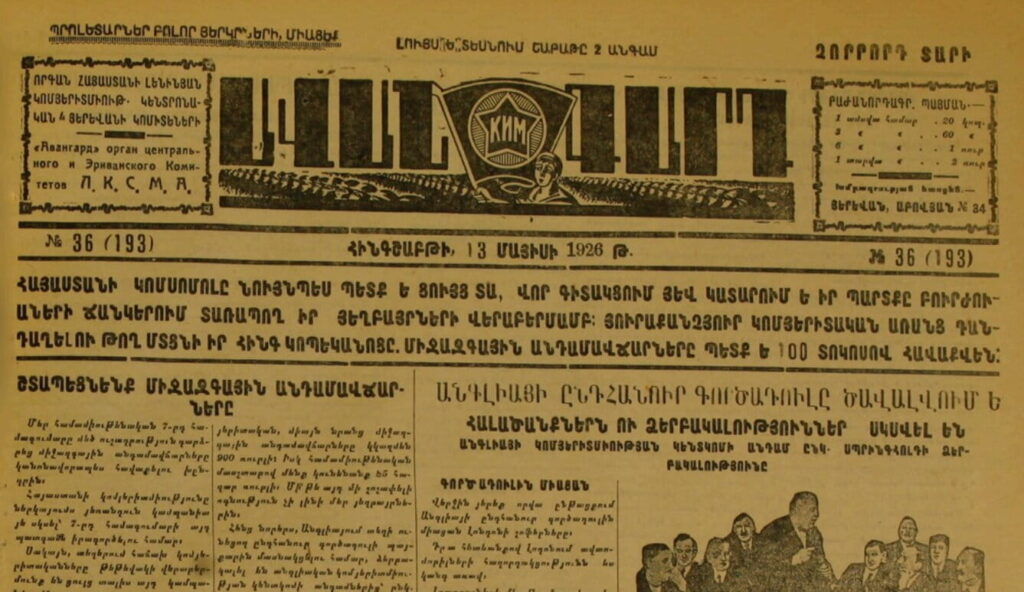
The history of Rind, as we have already seen from numerous documents, is a chronicle of an endless struggle for land and life-giving water. The latest discovery in our “Historical Press” series takes us back to the mid-1920s and sheds light on the history of the construction of one of the village’s most picturesque corners—Yeghegnalich (or the old village reservoir).
In the Thursday, May 13, 1926 issue of the “Avangard” newspaper, under the heading “From the Sorrows of the Village,” a report by K. Grigoryan from Rind has been preserved, which was simultaneously a voice of protest and a testament to the titanic work of the villagers:
FROM THE SORROWS OF THE VILLAGE
“Since 1922, the peasantry of Rind has built a reservoir through the village’s joint labor, but unfortunately, the reservoir does not hold the collected water, and the work done is lost in vain.
We have appealed several times to the higher authorities of our province to eliminate this defect of the reservoir through specialists, but our appeal has yielded no results.
I draw the attention of the relevant authorities to this issue.
K. GRIGORYAN
Daralagyaz (Vayots Dzor) — Rind”
From the efforts of 1922 to the modern-day Yeghegnalich
In all likelihood, the reservoir built by the villagers’ own efforts described in the article is the modern-day Yeghegnalich. This brief record shows the difficulties and engineering obstacles our ancestors went through, trying to make the arid lands irrigable when other water pipelines or pumping stations did not yet exist.
For decades, this artificial reservoir played a vital role in irrigating the village’s orchards and croplands, justifying the hardships the author wrote about in 1926.
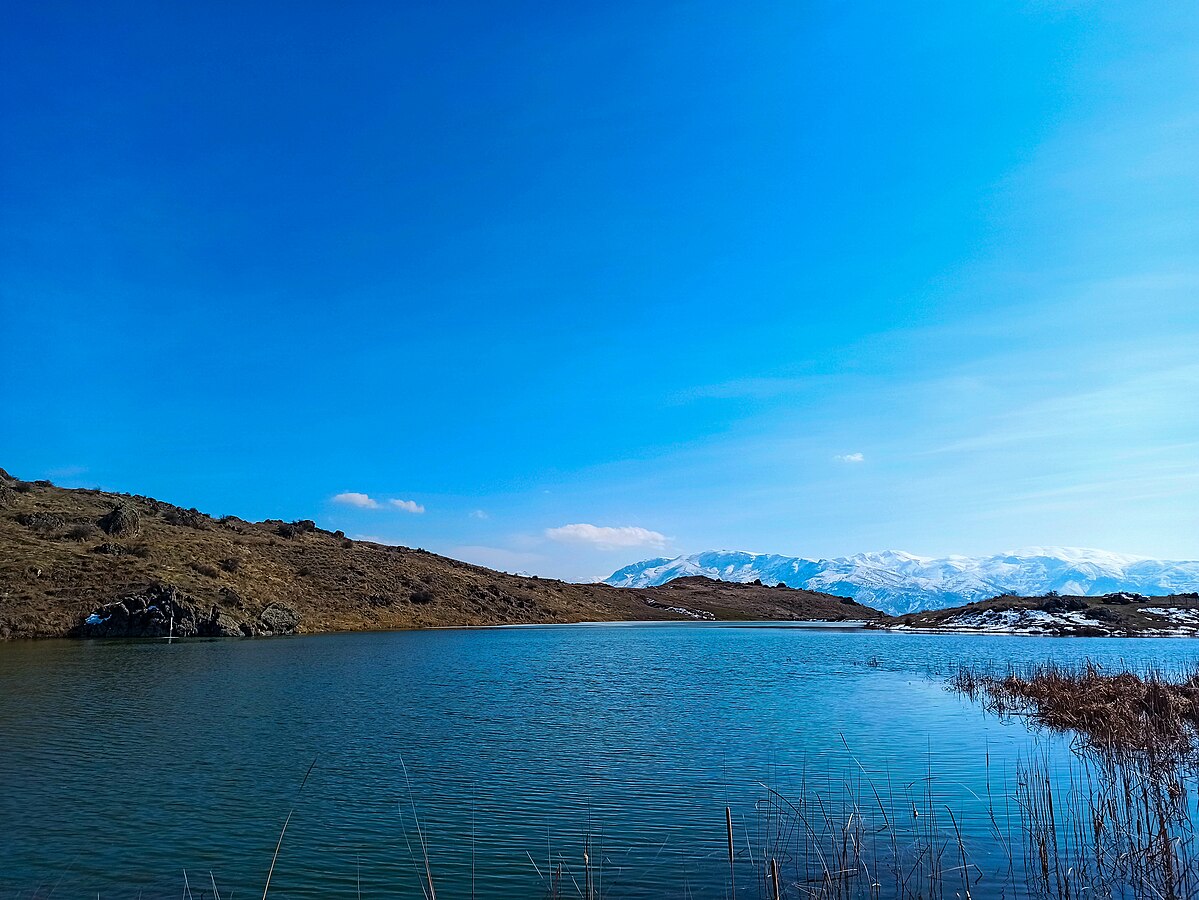
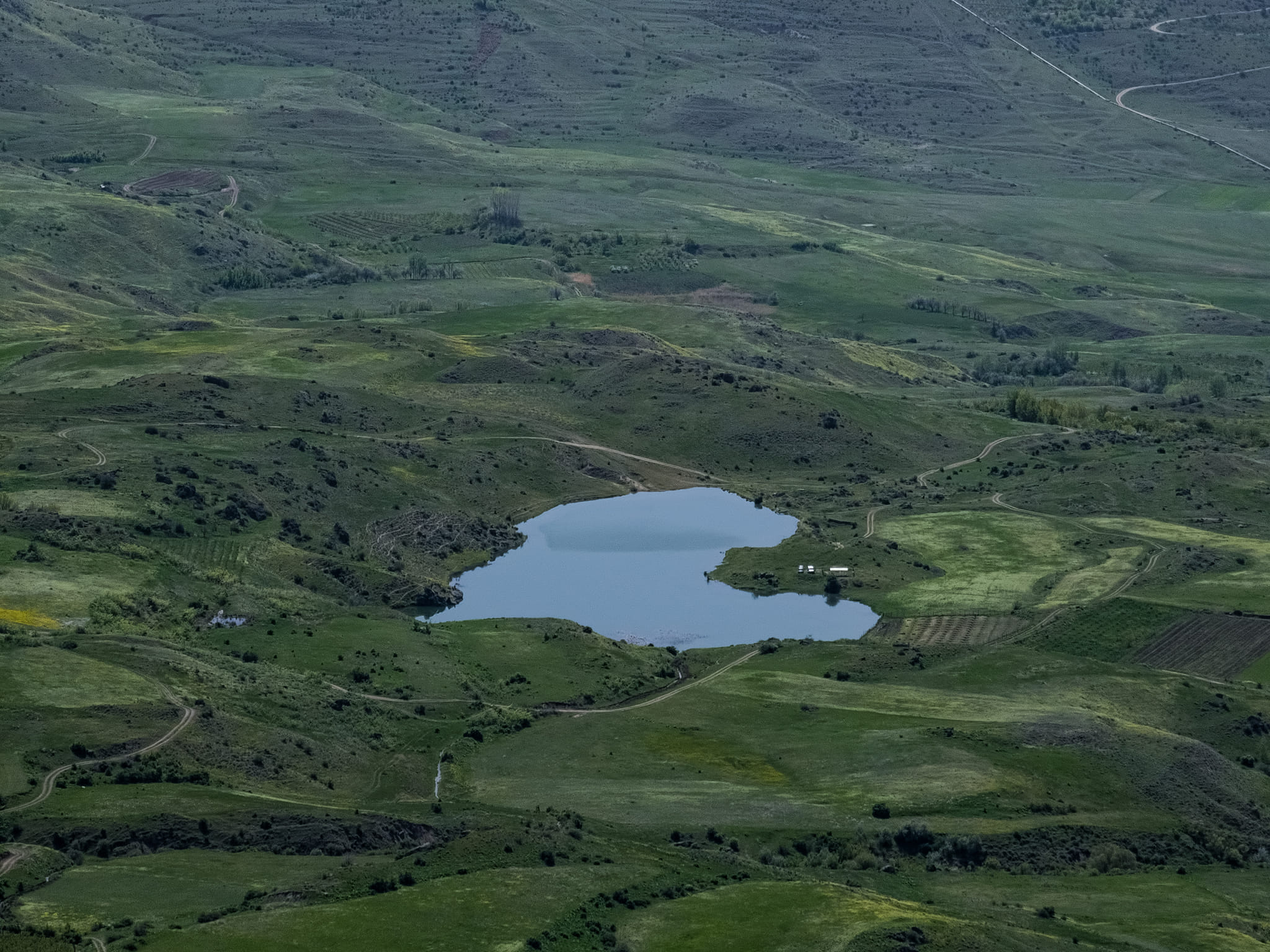
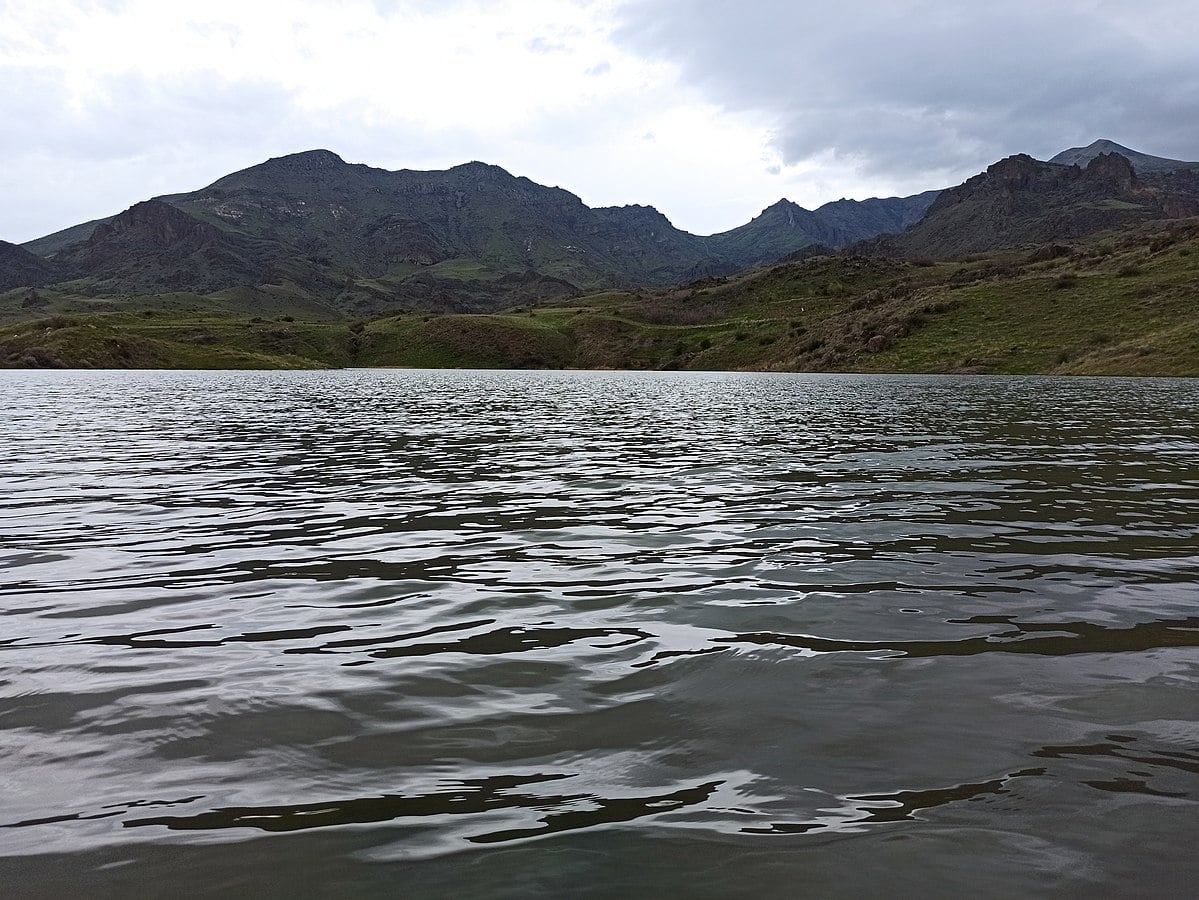
Today, Yeghegnalich has turned into an inseparable and beautiful part of Rind’s nature:
- Location: Located about 2 km northeast of the village
- Altitude: At an elevation of 1458 meters above sea level
- Area: Has a surface area of 2.12 hectares
- Dimensions: Reaches 294 meters in length, with a maximum width of 141 meters.
Times have changed, new water pipelines have been built (“Noravank Water”, “Khanjian Canal”), and the function of Yeghegnalich has transformed. This small lake, which was previously the only source of irrigation, now serves as a wonderful place for recreation, leisure, and fishing in the lap of nature, and is also used to water cattle taken to pasture.
The seed of hope planted and the stone laid in 1922, despite initial failures, ultimately served their purpose, leaving us this picturesque blue mirror as a legacy.