
 9°
9°  6 կմ/ժ


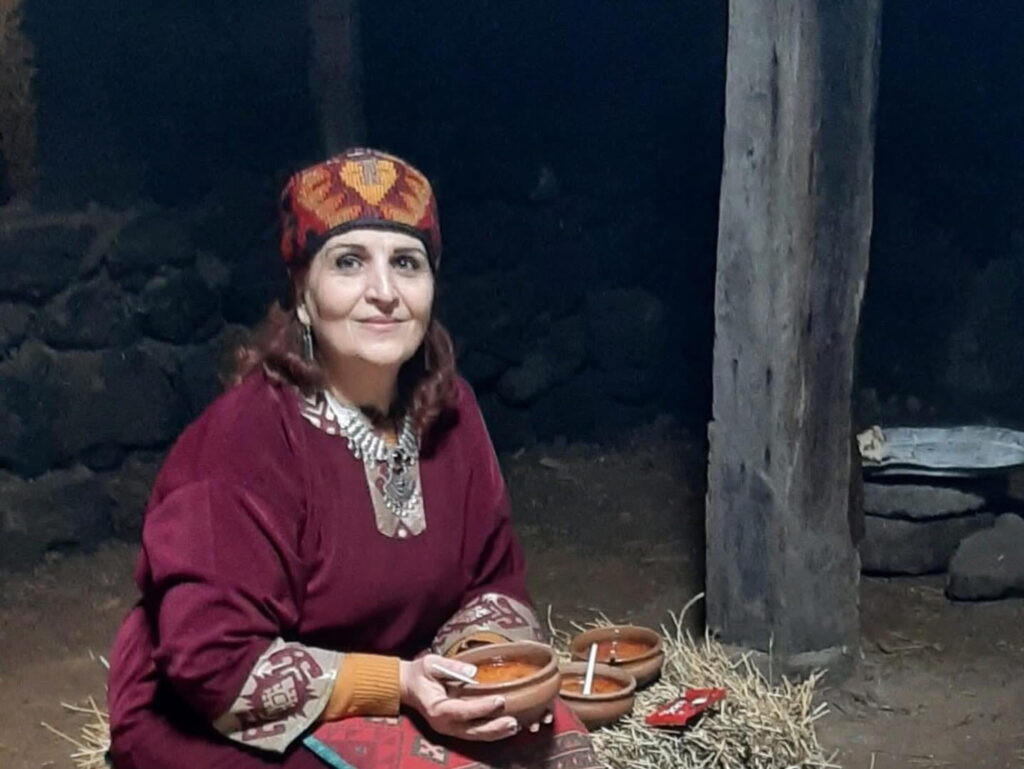
The author of the work is Gohar Harutyunyan—an artist, painter, performer of ethnographic songs, and the director of the “Goharner” choir of the “Mission Armenia” charitable non-governmental organization.
Her roots are closely intertwined with the history and lineages of Rind. On her paternal side, Gohar is from Aghavnadzor, from the Shahinents family, who originate from the village of Yekmal in Alashkert (Bagrevand district of the Ayrarat province). Her paternal grandmother, Nazik, is from the Safarents lineage of Rind—the daughter of the legendary Yenok Grigoryan.
On her maternal side, she belongs to the Minasents lineage of Rind. Gohar’s grandfather, Gevorg (Vache’s brother), never returned from the Great Patriotic War, so Gohar’s mother was cared for and raised by Vache and his wife, Yeghsapert. Gohar loved and accepted them as her own grandparents. The poem presented below is dedicated to the bright memory of these people, the warmth of their hearth, and the carefree childhood holidays she spent in Rind.
Տանձի կախանի անուշ բուրմունք կա
մանկության հուշում։Կտուրին փռած չրերի կողքին,
մոծակի խայթից անքուն գիշեր կա
մանկության հուշում։Տատիս թարմ կթած, փրփրուն կաթի
համն ու բույրը կա մանկության հուշում։Թոնրից թռչող ծաղկած լավաշի,
տատիս ալրահոտ, ճաքած ձեռքերի
ջերմությունը կա մանկության հուշում։Նրա դաղձաբույր գոգնոցի ծալքից
պես-պես ծիկրակող քաղցրավենիք կա
մանկության հուշում…Գյուղի իրիկվա մուժ լռության մեջ,
պապիս իմաստուն խոսք ու զրույցի
զարմանք գույներ կան մանկության հուշում։Չարդախից կախված ամուր չվանից
ճոճի երգեր կան մանկության հուշում։Ոսկեգույն օրեր, աստղաշատ երկինք,
արձակուրդների անհոգ հեքիաթ կա
մանկության հուշում…
Գոհար Հարությունյան (Գո Հար)
Նվիրված Եղսո տատիիս
Gohar Harutyunyan’s poem is like a faded yet deeply cherished photograph that suddenly acquires color, sound, and fragrance as you read it. The core and heartbeat of the work is the phrase “in childhood memories.” As a literary refrain, it not only imparts rhythm and musicality to the lines but also returns the reader to the starting point of nostalgia after each stanza.
The author does not lead us into abstract reflections; instead, she constructs highly tangible and concrete imagery, engaging all human senses. As we read, we feel the scent of hanging pears and mint, taste the frothy milk and the “blooming” lavash straight from the tonir, and hear the song of the swing and the wise words of a grandfather. The author is so sincere with her memories that even the “mosquito bites” and sleepless nights on the roof are remembered with a sense of sweetness.
The figures of the grandmother and grandfather are portrayed with a few precise brushstrokes. Grandma Yeghso’s “flour-scented, cracked hands” speak of uncomplaining rural labor, while the sweets peeking out from the folds of her apron speak of boundless, selfless love.
This is not merely a personal recollection; it is the collective memory of every Rind resident (and, indeed, anyone who grew up in a village)—written simply, without unnecessary pathos, and with profound gratitude toward one’s roots.