
 15°
15°  6 կմ/ժ


Three Khachkars in the South-East of Rind
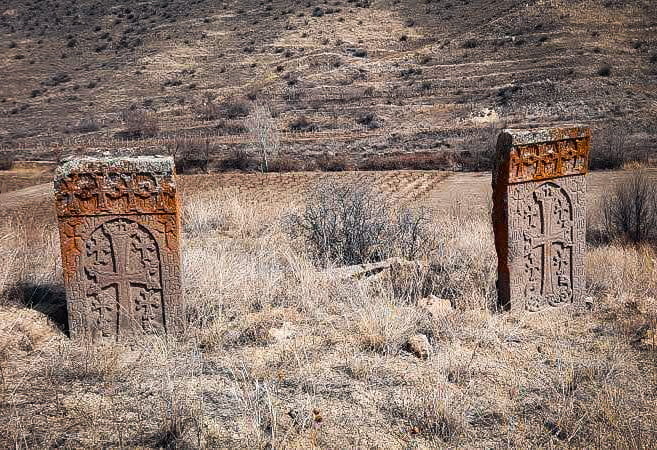
Outside the village, in the south-eastern section, on the right side of the road leading to Areni, three remarkable monuments of medieval culture are preserved on a gentle hill and within a small ravine.
These three khachkars (cross-stones), included in the State List of Immovable Monuments of History and Culture of Rind, are silent witnesses to the active life, faith, and construction activities of the 13th and 14th centuries. Below, I present the history and epigraphic features of each.
(State Identifier: 11.37/8)One of the most notable khachkars in the group dates back to 1301 (year “ՉԾ” of the Armenian calendar). This finely carved monument stands on a pedestal. Although its corners have broken over time, a highly significant 7-line inscription has been preserved at the bottom:
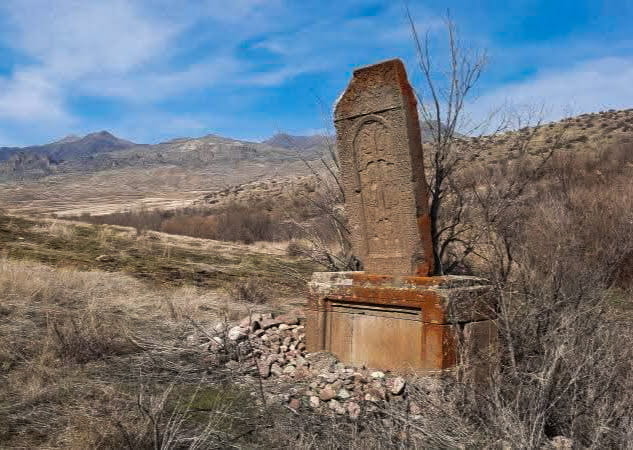
«ԱՅՍ ԱՐՁԱՆ ԱԻԾԵԱԼ (օծյալ) ԱՆՄԱՀ ԱՐՔԱԻՆ ՅԻ (Յիսուսի). Ի ՓՐԿՈՒԹԻ ՀՈԳՈ ՀԱՄԲԵԼԻՆ ԵՒ… ԵՒ ԵՂԲԱՐՑ ԻԻՐՈՑ ՈՐ ՇԻՆԵՑ ԶԵԿԵՂԵՑԻՍ ԵՒ ՏՆԿԵԱՑ ԶԱՅԳԻՍ»։
(This consecrated monument to the Immortal King Jesus. For the salvation of the soul of Hambel and… and his brothers, who built this church and planted these vineyards.)
Analysis: The inscription tells of Hambel and his brothers, who performed both a spiritual deed by building a church and an agricultural one by establishing a vineyard. A fascinating question arises: which church does it refer to? While the medieval church of Old Rind is known, it is possible that a smaller church or chapel once stood near this site, which was destroyed over centuries, leaving this khachkar as the only testimony to that lost sanctuary.
(State Identifier: 11.37/9)Located near the previous one, this khachkar dates to the 13th–14th centuries. It is distinguished by an abundance of personal names, providing insight into the lineage ties of that era. The inscription on the cornice and between the crosses reads:Analysis: While Sargis is the patron, numerous names are mentioned. Especially noteworthy are the female names like Khuand Khatun and Khutlu Khatun, which were characteristic of the Armenian nobility during the Orbelian era and the period of Mongol dominion.
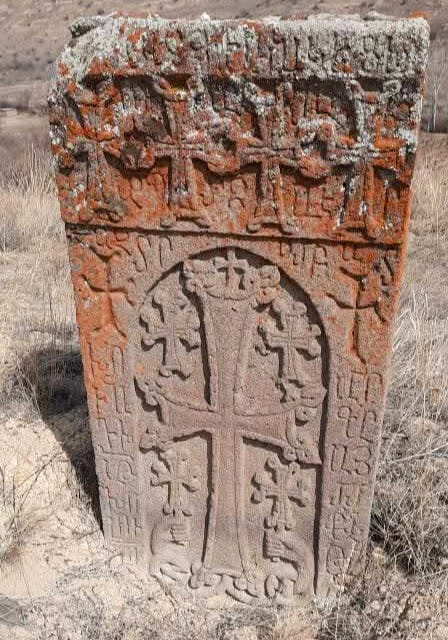
«[ԵՍ] ՍԱՐԳԻՍ ԿԱՆԳՆԵՑԻ ԽԱՉՍ ՍԻՐԱՄԷՔ… | ԿԱՐԱՊԵՏ ԻՐ ՄԷՐ ՀԱԶԱՐԴԵՂ. ՏՐ. ՍՄԲԱՏ ԽՈՒԱՆԴ ԽԱԹՈՒՆ ԽՈԻԹԼՈՒ ԽԱԹՈՒՆ ՄԱՐԳԱՐԱՅ, ՄԱՄՔՍՆ, ԹԱՄԹԻԿ, | ԶԹՈՒՄԱ ՅԻՇԵՑԷՔ»։
(I, Sargis, erected this cross… Remember Karapet, his mother Hazardel, Ter Smbat, Khuand Khatun, Khutlu Khatun, Margara, Mamksn, Thamtik, and Thuma.)
(State Identifier: 11.37/7)The third monument, commonly known as “Mkhitar’s Khachkar,” is attributed to the 13th century. The inscriptions on the cornice and the frontal part state:Analysis: Erected by Deacon Azizbek, the inscription asks to remember the sons of Ter Grigor and Mkhitar. The mention of several members of the clergy (Ter Grigor, deacons) suggests that this area was a sacred site of particular importance to the religious community of Rind.
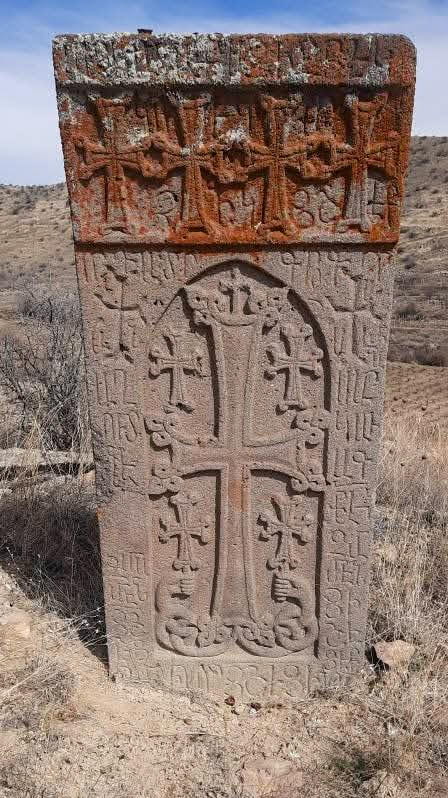
«ՍԱՐԿԱԻԱՔ ԱԶԻԶԲԷԿ ԿԱՆԿՆԵՑԻ ՈՐ | ՅԻՇԵՑԷՔ ՈՐԴԻՔՆ ՏՐ ԳՐԻԳՈՐԻ ԱՆԱՂՈՒՏ… ԶՄԱՄԷՆ ՅԻՇԵՑԷՔ. ՋԱՍԼԻՄ, ՍԱՐԿԱՒԱԳ ՔԱՀԱՆԱԻ ԶՄԱՄԷՆ ՀԻՇԵՑԵՔ ԶՄԽԻԹԱՐ ՀԻՇԵՑԷՔ Ի ՔՍ (Քրիստոս)»։
I, Deacon Azizbek, erected this. Remember the sons of Ter Grigor, Anaghut… Remember Mama, Jaslim, the Deacon-Priest, and Mkhitar in Christ.
The only scientific reference to these khachkars, specifically regarding their inscriptions, was published in 1967 in the “Corpus Inscriptionum Armenicarum” (Divan Hay Vimagrutyan) series by the Institute of Archaeology and Ethnography of the Academy of Sciences of the Armenian SSR.
Note: To convert dates from the Armenian Church calendar to the Gregorian calendar, you can use the dedicated tool on this page of our website.