 5°
5°  6 կմ/ժ


To feature this article in this section, it should first be noted that Momik was not from the village of Rind in the direct and classical sense, and there are few clear historical references to the settlement of Rind during his lifetime (13th–14th centuries). However, the beginning of the Great Master’s life, perhaps its sunset, and certainly the resting place of his lineage are inextricably linked to the medieval settlement of Ulgyur. Today, Ulgyur is located 6 km northeast of Rind and constitutes an inseparable part of the spiritual and daily environment of the people of Rind.
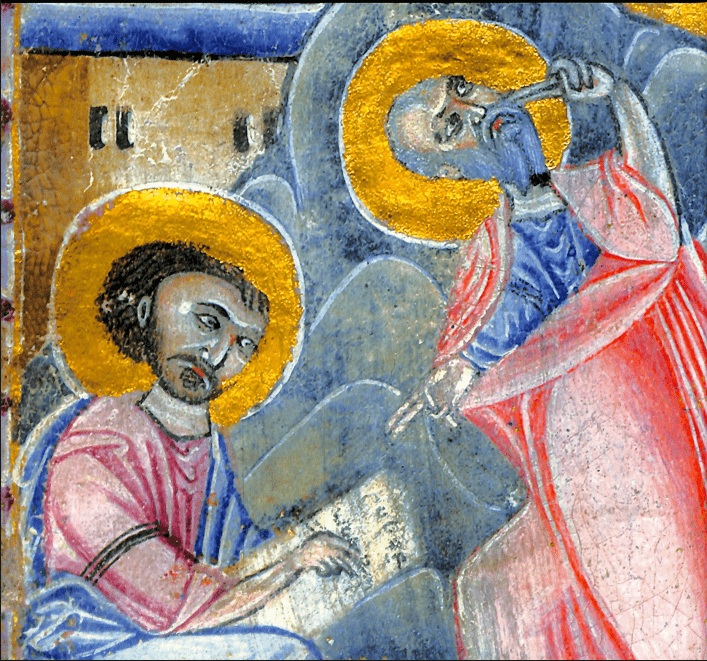
Momik is one of the three renowned representatives of the Gladzor School of Miniature Painting. He was born, in all probability, in the 1260s. He lived and created in the province of Syunik. He spent the rest of his life in Vayots Dzor, where he had children and grandchildren. The biography of Master Momik is woven with beautiful legends. Miniature painting, khachkar carving, architecture—the multi-talented Master beautified and flourished everything he touched. He breathed spirit into parchment and stone, bringing architectural structures to life and ennobling them, passing them down to generations as a “prayer in stone.”
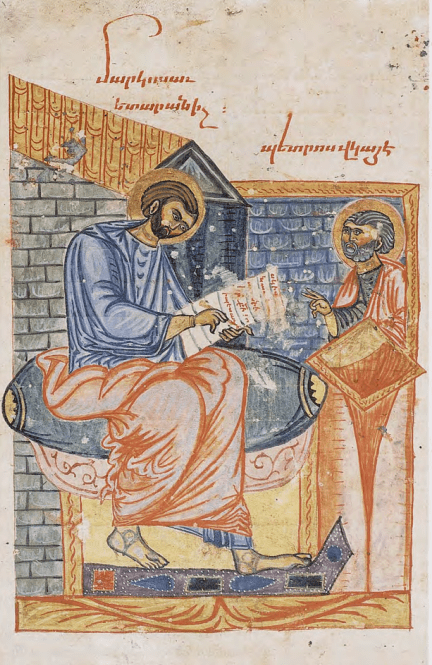
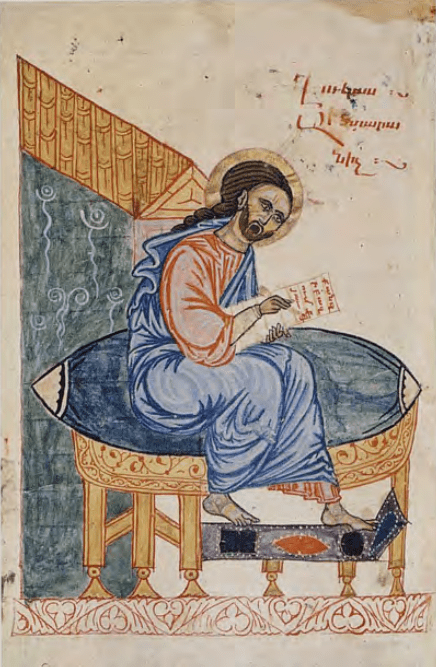
He was the chief architect of the Orbelyan princely house. His name is associated with the gavit (narthex) of the Noravank church, the church in Areni, and the two-story mausoleum-church of Prince Burtel in Noravank. The Zorats Church of Yeghegis and St. Grigor Church of Tatev are also attributed to him. He illuminated four Gospel manuscripts: the Gospels of 1292, 1302 (or Stepanos Orbelyan’s), 1283 (unsigned), and the collection of 1283–84.
We encounter Momik’s name for the first time in the colophon of a manuscript written at Gladzor University in 1283–1284 (kept in Vienna, in the library of the Mekhitarist Congregation, MS No. 571, fol. 24a). The inscription is placed in an unexpected section inside a floral headpiece, where the young master left the following note:
“Remember Momik, the painter of this altar (page), I beseech you.”
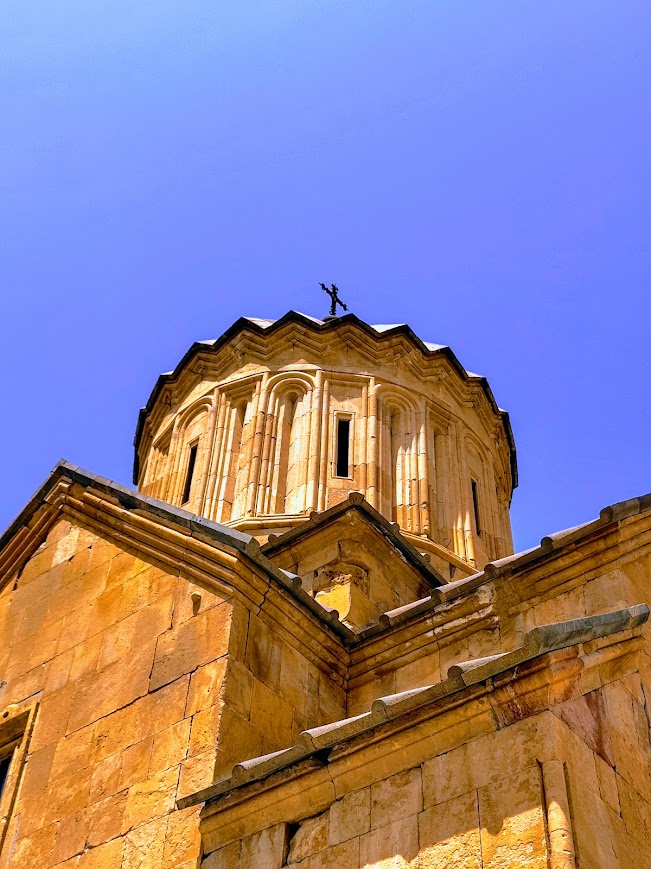
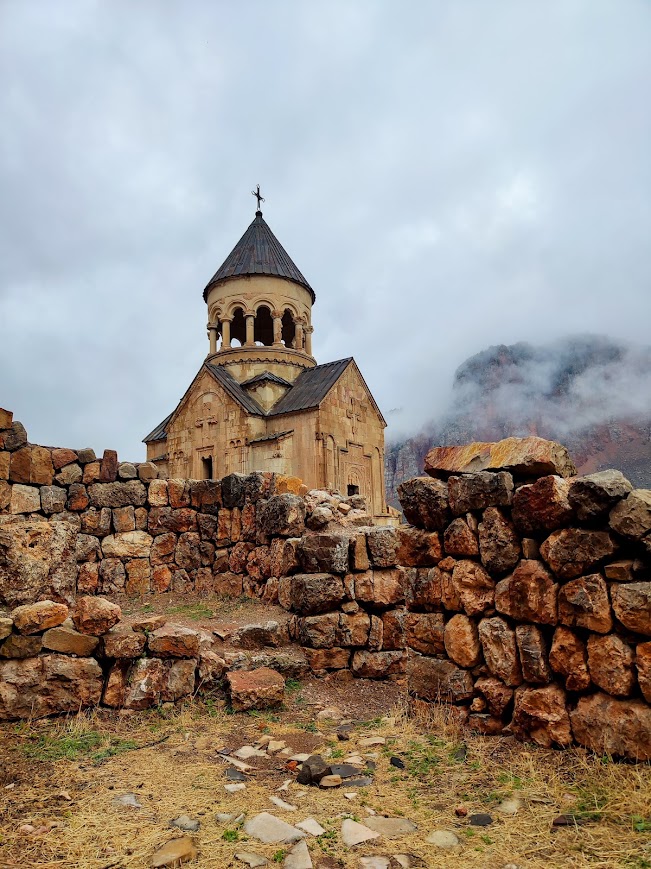
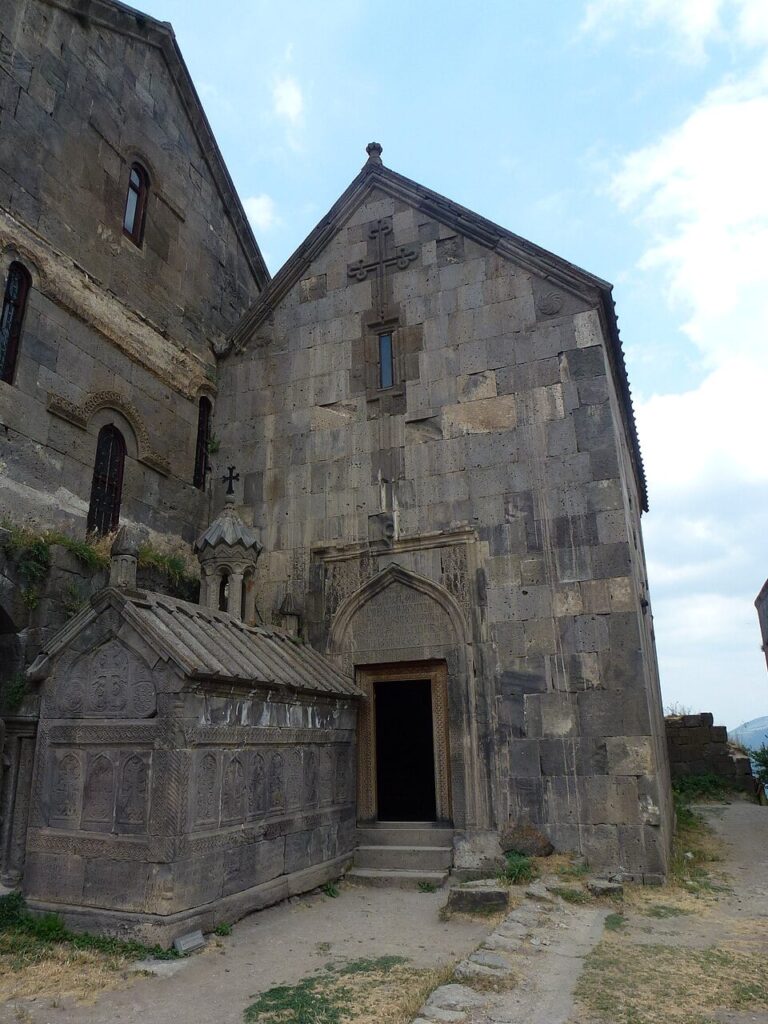
This note testifies that Momik began his creative path as an illuminator-miniaturist, later achieving the highest title of “Vardpet” (Architect/Master Builder).
Momik’s connection to the territory of modern Rind is confirmed by crucial archaeological findings. In the central part of the Upper Ulgyur settlement, the foundation walls of the 10th-century Church of St. Stepanos have been preserved. In 1955, in the cemetery of this ruined church, the renowned epigraphist Sedrak Barkhudaryan discovered a khachkar, the inscription of which shed light on the master’s personal life. The inscription mentions Askandar, the son of the Armenian miniaturist and architect Momik, and the latter’s son, Shatonik. This fact gives grounds to conclude that Momik’s dynasty lived in Ulgyur.
Today, Ulgyur is not merely an abandoned settlement. For the people of Rind, it is a living environment. The village’s main drinking water supplies come from the cold springs of Ulgyur, symbolically connecting the past and the present. The area serves as a hayfield, but more importantly, it has become a unique sanctuary and recreation zone. The residents of Rind frequently visit there to commune with the spirit of Momik’s era, where nature and history are fused together.
As noted in documentaries and studies, Momik was not only a master of stone but also of light. The name “Momik” has given rise to various interpretations and assumptions, as it is found neither in written sources nor in folklore of that time. It can be assumed that he was a man of small stature and delicate build, and “Momik” (Little Candle) was given to him as a nickname, which he later adopted as his name. One could say that his life was a candle burning in God’s temple for the glory of God. His name perhaps testifies to his mission to illuminate the House of God. And that light still radiates from the ancient stones of Ulgyur.