
 13°
13°  12 կմ/ժ


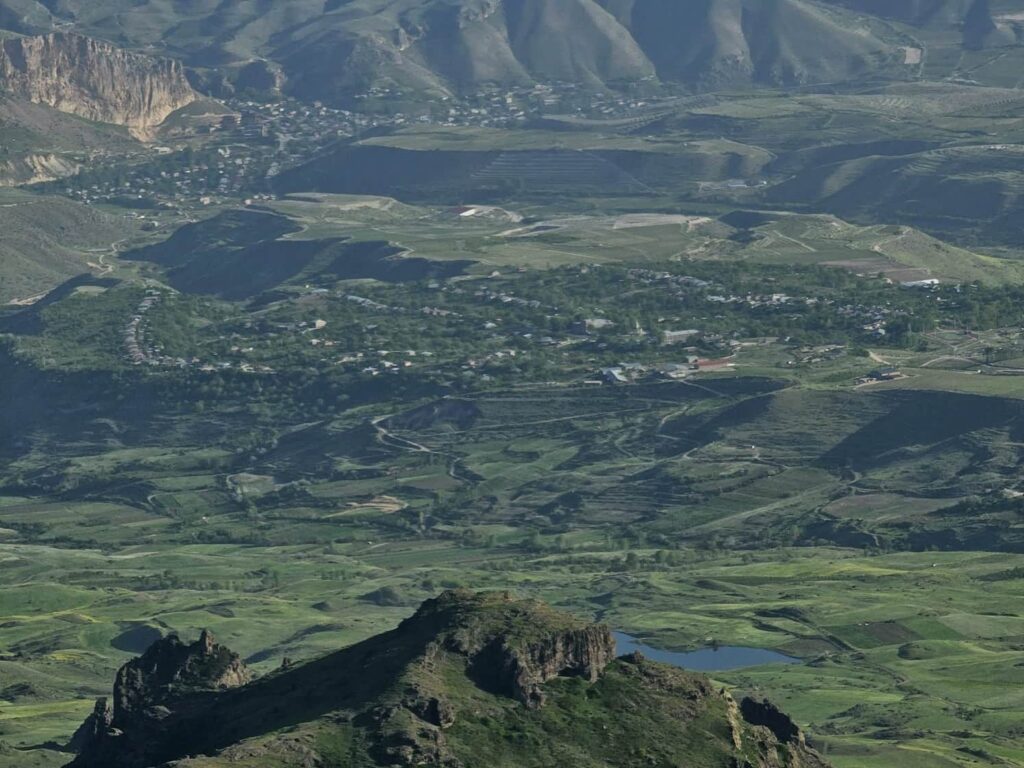
The history of the village of Rind is not merely a chronicle of a settlement; it is a concentrated portrait of the endurance of the Armenian people. It begins in ancient geological eras and reaches into the modern, evolving community of today.
Prehistoric Era: Traces of the Tethys Ocean
The territory of Rind is exceptional in its geological past. Finds discovered in the area and currently displayed in the History Museum of Armenia—fossilized shells and remains of marine organisms—indisputably testify that during the Paleogene and Eocene epochs (approximately 56–34 million years ago), this entire area was covered by the waters of the ancient Tethys Ocean.
The ocean’s retreat occurred at the end of the Eocene and the beginning of the Miocene as a result of powerful mountain-building processes triggered by the collision of the Arabian and Eurasian tectonic plates. The limestone mountains and canyons that rose after the waters receded became a comfortable haven for human habitation.
Medieval Heritage
The region has been actively populated by indigenous Armenians since the 2nd millennium BC, as evidenced by numerous archaeological layers in Rind’s Kakavadzor area, the Spitak Kar (White Rock) vicinity, and the southwestern slopes of Mt. Gomadrunq.
Administrative Affiliation in Different Historical Periods
Throughout the centuries, the territory of Rind has been an integral part of Armenian statehood and administrative units:
- During the Kingdom of Greater Armenia (189 BC – 428 AD): The village area was located in the northwestern part of the Vayots Dzor canton of the Syunik province. There are no specific written records of the settlement from this period.
- During the Bagratid Kingdom of Armenia (885–1045): The territory was part of the domains of the presiding princes of Syunik, serving as a strategically significant province within the strengthening Armenian kingdom. There are no specific written records of the settlement from this period.
- Under the Rule of the Orbelian Dynasty (12th–14th centuries): Following the fall of the Bagratid Kingdom and the subsequent liberation of Armenia by the Zakarians, Vayots Dzor passed to the Orbelian princely house. Rind became a part of the domains of this powerful dynasty, which led to the subsequent mention of the village in historical chronicles.
The first clear written record of Rind dates back to the 13th century. Historians agree that Rind is the village of Rredi (or Rreghi) mentioned in the work “History of the Province of Sisakan” by the great Armenian historian and theologian Stepanos Orbelyan. Although Orbelyan did not leave an extensive description, the village was included in the list of settlements paying taxes to the Tatev Monastery, indicating a medium-sized settlement with an established economy.
Around Rind lie several historical sites:
-
Ulguyr (Ulnots): Famous for its ancient churches and khachkars (cross-stones).
-
Spitak Vanq (White Monastery): Located in the gorge separating Mt. Tsolasar and Mt. Aghjkanvag.
-
Vardanes and Chgnavor: Pre-Christian and early medieval Armenian settlements.
Depopulation and the Great Exile (14th–17th Centuries)
From the 14th century, the village’s population began to decline due to devastating Mongol invasions, epidemics, and natural disasters. However, the most tragic page was written in the early 17th century. In 1604, during the forced deportation by Shah Abbas I of Persia, when nearly 300,000 Armenians were displaced to Persia, Rind was completely depopulated. From that moment until the start 19th century, the village had no permanent population.
Renaissance
Rind was resettled after the Treaty of Turkmenchay in 1828. The first resettler was Simon of Shorg. Soon, the sons of Melik-Safar—Melik Balin, Aghabab, and Grigor—settled there, followed by Zargar Tadevos and other families. Some ancestors migrated from the villages of Khoy and Salmast.
According to ethnographer Yervand Lalayan, the patriarch of the Melik-Safar dynasty, Stepan, lived in the Bagratid capital of Ani, where he held the title of Melik (Sardar) and a military command position. His brother, Melik-Tangi, settled in the village of Brnakot in Sisian (founding the Melik-Tangyan dynasty).
Demographic Portrait (1873–1931)
Statistics from Zaven Korkotyan show the village’s steady rise:
| Year | Population | Ethnicity |
| 1873 | 228 | Armenian |
| 1886 | 351 | Armenian |
| 1897 | 426 | Armenian (1st Russian Census) |
| 1914 | 506 | Armenian |
| 1919 | 896 | Armenian (Peak due to refugees) |
| 1922 | 717 | Armenian (Decline due to war/famine) |
| 1931 | 914 | Armenian |
The sharp increase in 1919 was due to the large influx of refugees who survived the Armenian Genocide and found shelter in Vayots Dzor.
The Struggle for Land, Water, and Freedom
In the mid-19th century, Rind’s residents had to protect their rights against contractors. In 1849, Sargis Tarumyan of Shushi tried to seize Rind’s water from Ulguyr through deception, but the villagers appealed to the provincial governor and restored justice.
In modern times, the Jndrakhach plateau near Rind became a battlefield for Armenian-Turkish clashes. On November 29, 1919, the local militia of Aghavnadzor and Rind defeated the marauders of Khalin Bey.
In April 1921, after the fall of Yerevan, the “Great Retreat” began. Memoirs of Zakar Ashkhatuni testify that nearly 15,000 people, retreating under the command of Yapon, reached Rind on April 12. “Rind became a life-saving haven. The villagers opened their doors, giving bread and water to their exhausted compatriots.
The pioneer of this struggle was the legendary fedayi Mher Balyan (son of Mkrtich), whose name and strength struck terror into the enemy. In June 1921, taking advantage of the fact that Rind’s fedayis and militia were away from the village, the “Red Tabor” of Turkish units entered the village of Rind. They committed atrocities against the elderly and plundered the inhabitants.
The people of Rind could not tolerate the violation of their honor. Upon receiving the news, Mher and his men immediately moved toward the village and cut off the path of the Turkish marauders near Lake Yeghegn (Yeghegnalich) and the “Yellow Hills.” They were joined by the cavalry from Garni, led by Khnko. The Armenian side opened fire first, which decided the outcome of the battle. This rout marked the end of the Turkish detachment in Rind. The Turks’ escape route was also blocked, resulting in an indescribable slaughter. Only a few members of the Turkish detachment in Rind managed to escape—mostly those fleeing through the mountains, and even they were wounded.
From Old Rind to New Rind: A Modern Community
In 1967, due to landslides, the old village site became dangerous. The Soviet authorities offered to move the residents to the Etchmiadzin region, but the elders refused, remaining faithful to their land and the Spitak Kar. The village moved 3 km west to the “Tap” area.
Key developments in the new village:
-
1950: Electricity arrived from the Areni Hydroelectric Station.
-
1969: The secondary school was opened.
-
1983: A memorial was erected for the victims of WWII (over 100 Rind residents participated).
-
1996: Thanks to Archbishop Abraham Mkrtchyan and the blessing of Catholicos Garegin I, irrigation water reached Rind from the Noravank gorge.
Rind Today
Today, Rind is one of the most vital settlements in Vayots Dzor. It has become a center for “green energy” with solar panels and water heaters on roofs. The houses are mostly two-story stone structures where former granaries and cellars are being converted into modern living rooms. With high-speed internet (since 2010) and a renovated stadium (2022).
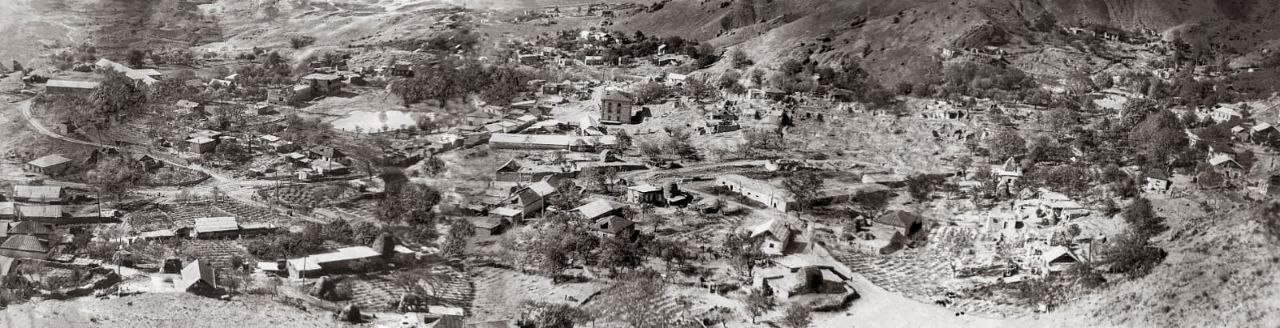
Old Rind